









APID (Advanced Placement International Diploma)
The AP International Diploma APID represents a prestigious globally recognized credential offered by the College Board for students demonstrating outstanding academic excellence across multiple Advanced Placement examinations with a distinctly global perspective throughout their high school careers.
Overview of APID
This specialized international diploma extends beyond standard AP achievements by requiring comprehensive international coursework.
Historical Context
The College Board introduced the AP International Diploma APID in 2012 to address growing demand from secondary schools and students seeking standardized credentials that colleges worldwide would recognize and value for admission decisions.
Core Objectives
The APID aims to validate students’ outstanding academic excellence across diverse disciplines while encouraging globally-minded course selections that prepare learners for success in increasingly interconnected educational and professional network environments worldwide.
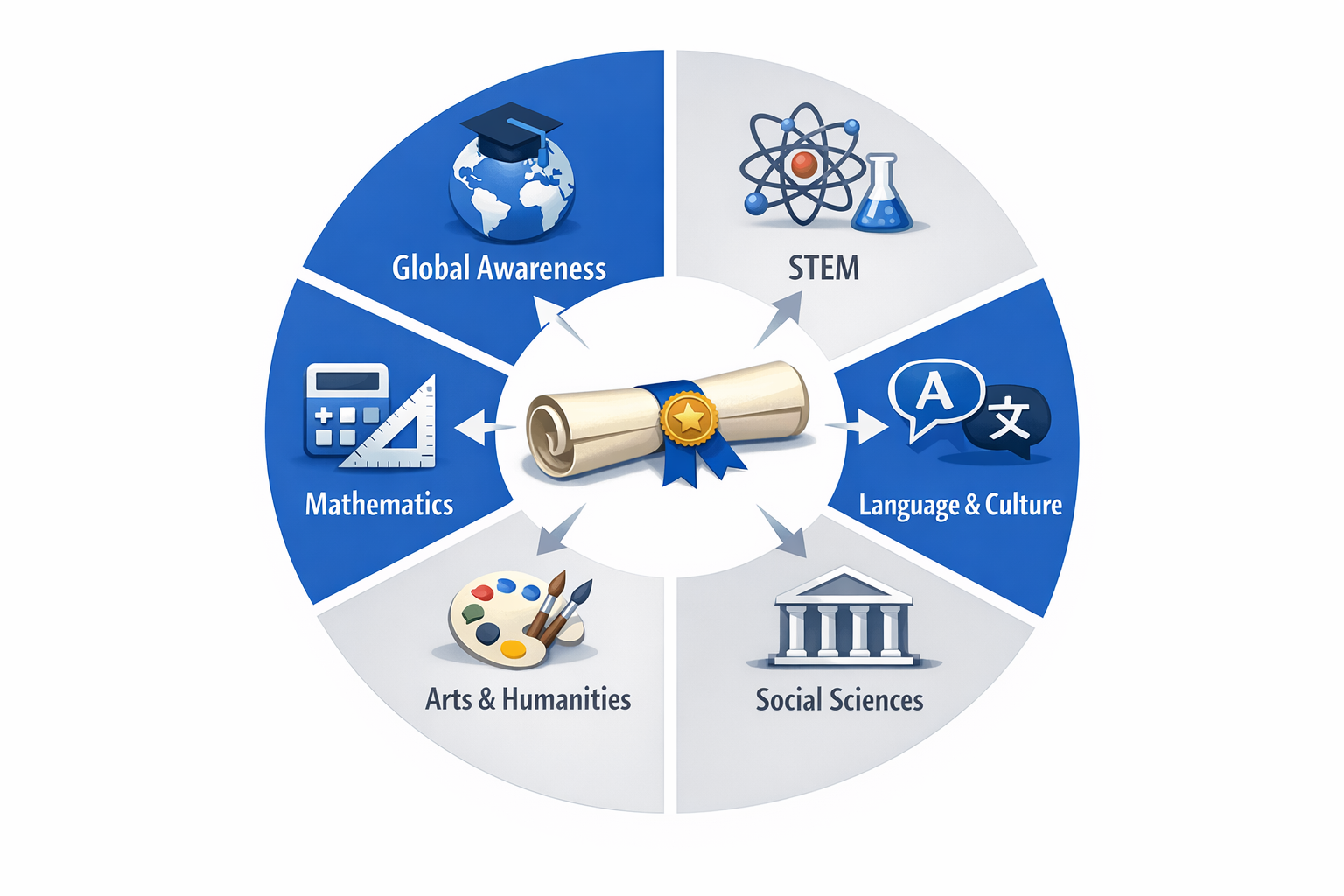
Why APID Matters for Your Academic Goals
The AP International Diploma significantly strengthens college applications by demonstrating rigorous academic preparation and international awareness. If you’re also pursuing an accredited online high school diploma, see our accredited online high school.
Global Recognition
Colleges across Europe, Asia, and Australia actively recognize the international diploma as equivalent to their country qualifications, giving holders advantages similar to those earned through International Baccalaureate or Cambridge AICE programs.

Added Advantages for U.S. Students
American high school students pursuing the APID distinguish themselves in competitive admissions pools at universities with strong international programs while demonstrating academic flexibility that appeals to selective institutions valuing global perspectives. SVHS also offers a full-time online diploma program for learners who want an accredited pathway.
Who Is Eligible to Pursue APID?
Students attending secondary schools outside the United States or planning international university applications typically pursue the AP International Diploma.
International Students vs. U.S. Students
International students attending school outside the United States are automatically awarded APID consideration, while U.S.-based students must send their AP exam scores to universities abroad to meet eligibility requirements.
When to Start Preparing
Students should begin planning their international diploma pathway during freshman or sophomore year, allowing sufficient time to balance regular coursework with five required AP exams across multiple disciplines.

Key Application Considerations
Meeting AP course enrollment deadlines proves crucial for APID candidates who must track their exam scores through College Board online accounts while ensuring all requirements align before they graduated.
APID vs. Other Credentials
Understanding how the AP International Diploma APID compares to other academic credentials helps students identify informed decisions.
APID vs. Standard AP Scholar Awards
The international diploma requires specific content area distributions and global perspective beyond standard AP Scholar award achievements, providing globally recognized honors that traditional AP achievements lack despite requiring fewer total exams.
Evaluating APID vs. IB vs. AICE
While IB Diploma demands extensive internal assessments and AICE requires Cambridge-specific examinations, APID offers greater flexibility through AP courses already available at most American and secondary schools.

Content Area 1: English/World Language Requirement
Language proficiency forms the foundation of international diploma requirements through demonstrated multilingual competence.
Meeting the Two-Language Rule
Students must pass two AP exams in English plus one World Languages or two different World Languages, choosing from approved AP exam offerings including Spanish, French Language, German, Italian, Chinese, Japanese, and Latin.

Common Challenges and Tips
Selecting world languages where you possess existing proficiency makes preparation easier while dedicating consistent daily practice to vocabulary, grammar, and culture contexts ensures stronger performance on challenging AP language examinations.
Substitutions and Exceptions
The College Board prohibits combining Spanish Language with Spanish Literature or similar pairings within single languages, while proficiency letters previously accepted as substitute for native speakers phase out completely in 2025.
Content Area 2: International Perspective
This requirement emphasizes global perspective through internationally-focused AP coursework selections.
Eligible AP Courses
Students can fulfill this requirement through World History, Human Geography, Comparative Government, European History, or Art History, selecting courses that align with their interest and academic strengths.

Integrating Cultural Awareness
Maximizing globally-focused AP classes involves engaging with international current events, participating in culture exchanges, and developing cross-culture competencies that extend beyond textbook learning into practical understanding.
Content Area 3: Math and Science
STEM requirements ensure international diploma recipients demonstrate quantitative and science reasoning abilities.
List of Eligible Subjects
Qualifying courses include Calculus AB, Calculus BC, Statistics, Biology, Chemistry, Physics, Environmental Science, and Computer Science, providing options for students with varying STEM interest and career goals. See our online high school science classes.

Managing Rigor in Math/Science AP Classes
Success requires balancing theoretical understanding with hands-on practice through laboratory work, problem sets, and collaborative study while reviewing prerequisites thoroughly before enrolling in higher courses.
Course Selection Strategies
Students should evaluate their math foundations and science interests when selecting courses, considering schedule demands to avoid overload while maintaining performance across all APID requirements simultaneously.
Content Area 4: Additional AP Exam
This flexible requirement allows students to showcase breadth beyond core academic disciplines.
Variety of Options
Social science examples like Psychology, Economics, or U.S. History qualify alongside AP Capstone courses, Studio Art portfolios, or Music Theory, offering diverse pathways for meeting this one additional AP exam requirement.
Selecting the Right Elective
Choose electives aligning with intended college majors while showcasing intellectual breadth, considering how each option complements other international diploma requirements and strengthens your overall academic record.
Combining Resources Effectively
Managing separate study schedules across multiple AP subjects requires strategic planning, utilizing College Board practice examinations, review books, and online network resources to maximize preparation efficiency.
Scoring Requirements and Exam Strategies
Achieving minimum score of three on all five required examinations demands strategic preparation.
Exam Preparation Essentials
Successful candidates utilize comprehensive study guides, official College Board practice tests, and structured review schedules while implementing time management strategies for optimal test day performance.
Retaking AP Exams
Students may retake examinations annually with only highest score counting toward international diploma requirements, though additional fees apply and scheduling conflicts with other examinations require careful planning.
Finalizing Your APID Journey
Completing the AP International Diploma process requires careful tracking and strategic presentation of achievements.
Tracking Your Progress
Monitor APID progress through your College Board account dashboard, setting calendar reminders for registration deadlines and score releases while ensuring all five content areas receive adequate attention.

Putting APID on College Applications
Highlight international diploma achievement prominently in personal statements and resumes, emphasizing global competency, outstanding academic excellence, and commitment to international education when communicating with admissions committees worldwide.