




School ASL: Understanding the Basics
Learning the American Sign Language sign for school opens doors to meaningful communication in educational settings. This guide covers proper technique, cultural context, and practical applications for beginners ready to start their sign language journey. If you’re new, start with our ASL 1, Part 1 course.
Why Learning American Sign Language Is Valuable for Students and Educators
American Sign Language transforms classrooms into inclusive spaces where all students thrive regardless of hearing ability.
Inclusive Education and Better Communication
Sign language bridges communication gaps between hearing and Deaf students while fostering empathy and understanding. Teachers using American Sign Language create welcoming environments where Deaf learners feel valued and connected. This visual language enhances classroom dynamics by providing alternative communication methods that benefit all students including children with learning differences.
Career and Community Advantages
Proficiency in American Sign Language opens doors to interpreting careers and specialized education roles with growing demand. Beyond professional benefits, sign language connects you to vibrant Deaf community networks and enriches your cultural perspective. Bilingual educators command higher salaries while students gain competitive advantages in college applications and future employment opportunities.
How to Sign School in ASL Step by Step
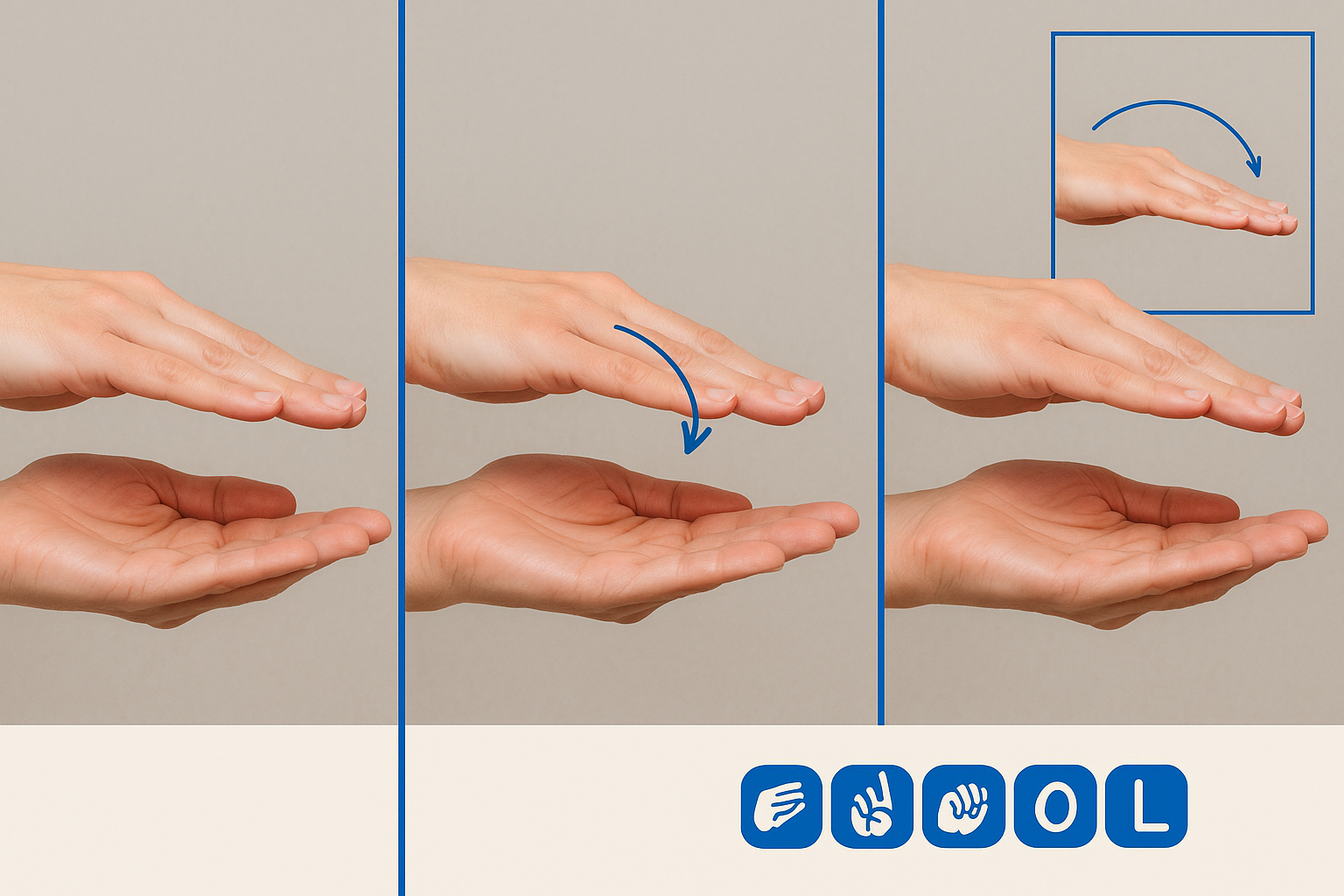
Form flat hands then tap your dominant hand palm against your base hand palm twice horizontally.
Common Variations and Related Vocabulary
Regional differences exist including single-tap versions while fingerspelling S-C-H-O-O-L serves formal contexts effectively. Continue with ASL 1, Part 2 to build beyond the basics.
Tips for Practicing and Mastering American Sign Language
Daily practice combined with Deaf community engagement accelerates your sign language fluency and confidence significantly. As you progress, explore ASL 2, Part 1.
Building Muscle Memory
Practice the school sign twenty times each morning to establish automatic recall through repetition. Set phone reminders for brief signing sessions throughout your day focusing on smooth controlled motion. Mirror practice helps identify and correct dominant hand positioning errors while building natural signing rhythm.

Finding Practice Partners
Local Deaf education centers offer weekly practice groups where beginners learn from native signers. Online platforms like Discord host American Sign Language conversation rooms providing flexible practice opportunities across time zones. University ASL clubs welcome community members creating supportive environments for skill development and cultural exchange.
Exploring American Sign Language Resources and Courses Online
Quality online programs combine video demonstrations with interactive exercises and cultural education components. Have questions? Visit our ASL Ask the Teacher page.

Deaf Education, Culture, and Classroom Integration
Understanding Deaf culture enriches American Sign Language learning while proper classroom integration supports all students effectively.

Beyond School: Building a Broader ASL Vocabulary
Expand from school to related signs like teacher student homework and classroom for contextual fluency. Advance your skills in ASL 2, Part 2.
Conclusion and Key Next Steps
Practice the school sign daily while seeking community connections to deepen your ASL journey forward.