









Honors Physics: The Complete Guide for Advanced Learners
Honors Physics represents the pinnacle of high school science education, offering motivated students an accelerated pathway into advanced scientific thinking and complex problem-solving that prepares them for university-level STEM coursework and beyond.
Defining Honors Physics
The honors physics course elevates standard physics curriculum through rigorous mathematical applications, theoretical depth, and comprehensive laboratory experiences that challenge students intellectually.
Core Differences from Standard Physics
Honors Physics demands mastery of complex mathematics including calculus-based derivations while emphasizing deeper conceptual discussions through intensive laboratory work and independent research projects.
Why Choose Honors Physics?
Students select the honors physics course to embrace intellectual challenges while building stronger foundations for college STEM programs and developing critical problem-solving skills.
Advantages for College Admissions
Honors Physics showcases academic rigor on transcripts while demonstrating readiness for advanced STEM majors and positioning students competitively for prestigious scholarships and university honors programs.
Essential Prerequisites and Skills
Success requires strong mathematical foundations including advanced algebra, pre-calculus proficiency, and prior exposure to basic physics concepts students must understand.
Recommended Coursework
Students need Algebra II and Pre-Calculus for complex equation handling, trigonometry for vector components analysis, and prior introductory physics knowledge for conceptual readiness.
Core Topics Explored
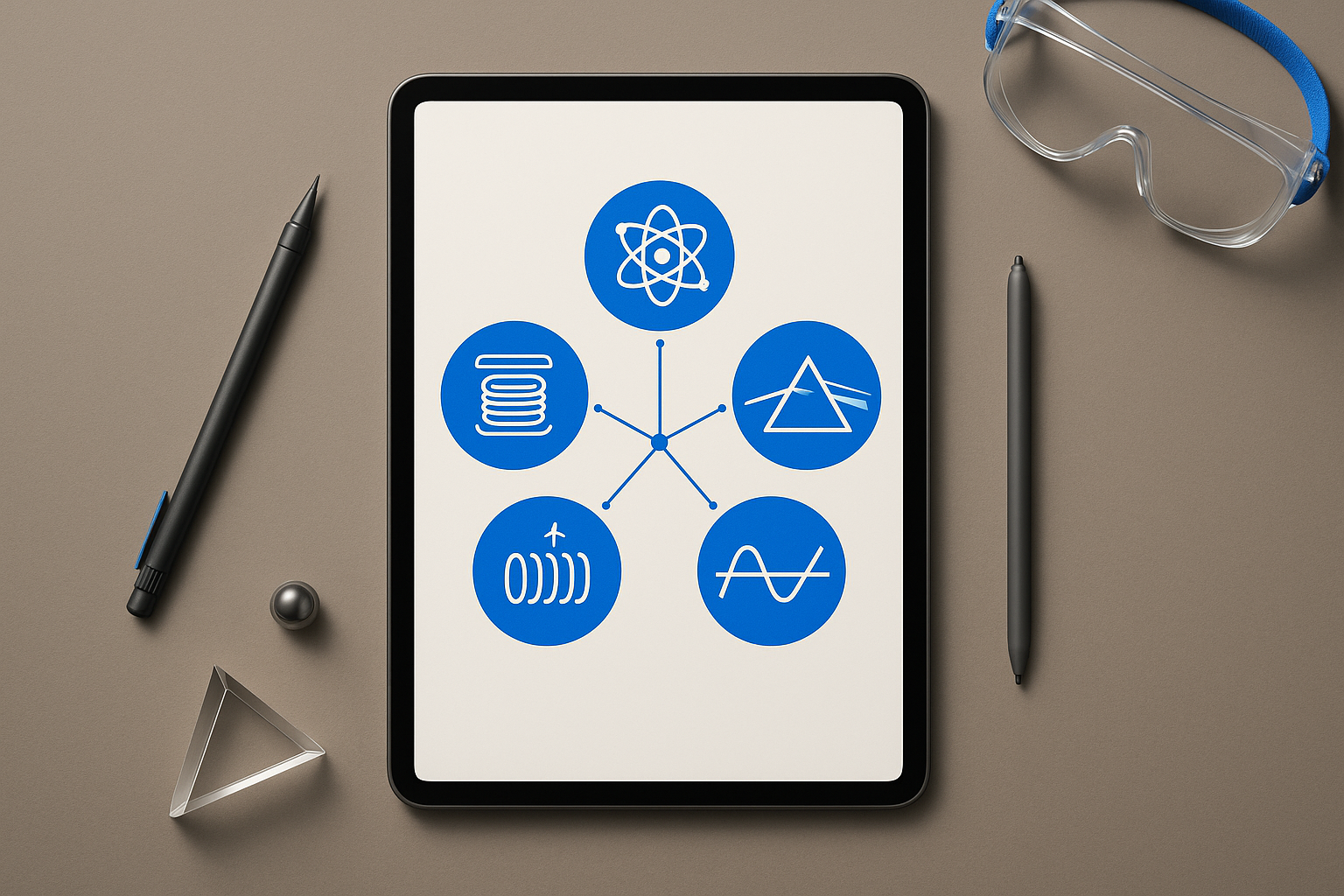
Physics courses encompass classical mechanics, thermal physics, electricity and magnetism, waves, optics, and modern physics concepts through advanced mathematical frameworks.
Areas of Emphasis
Mechanics including kinematics and dynamics forms the foundation, while energy concepts covering work, power, and thermal physics complement waves, optics, and magnetism studies.
Deep Dive into Mechanics
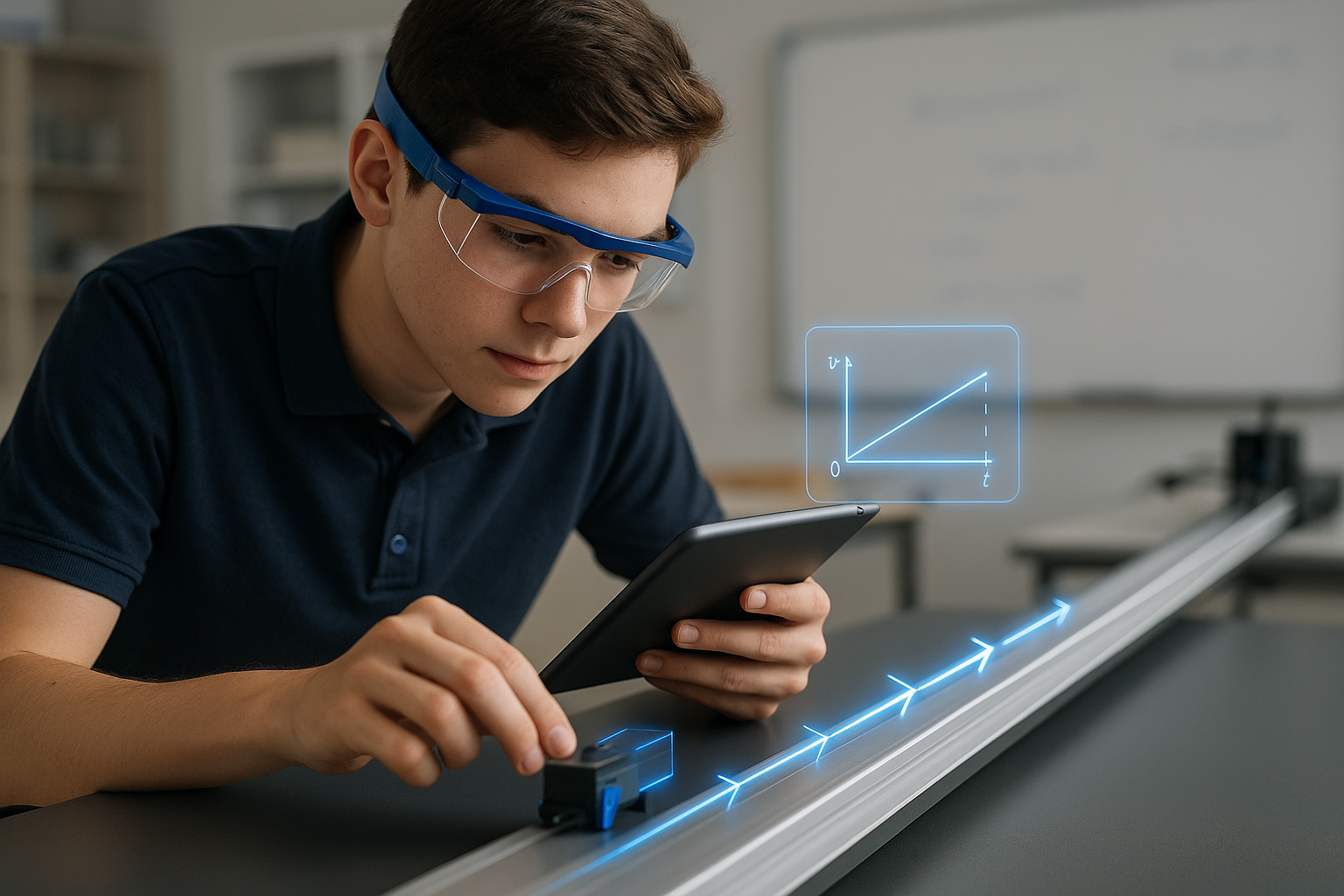
Mechanics explores motion, force, and energy through sophisticated mathematical models and real-world applications requiring advanced problem-solving skills students develop.
Key Subtopics in Mechanics
Kinematics equations describe linear motion and acceleration combined with Newton’s three laws and free-body diagrams while friction, circular motion, and momentum complete the mechanics foundation.

Exploring Electricity and Magnetism
Electromagnetic theories at honors level integrate Coulomb’s law, electric fields, circuits analysis, and magnetic phenomena through calculus-based approaches and practical applications.
Real-World Applications
Circuits analysis explains household electronics functionality while magnetic force powers motors and generators, and electrostatics governs everyday phenomena from lightning to photocopiers.
Understanding Thermodynamics
Thermal physics examines heat transfer, energy conservation, entropy, and efficiency through mathematical models and practical engineering applications students learn to understand.
Thermal Physics Essentials
Heat transfer through conduction, convection, and radiation combines with thermodynamics laws and entropy concepts, illustrated through practical examples like engines and refrigeration systems.
Unveiling Modern Physics
Modern physics introduces quantum mechanics, special relativity, and nuclear physics concepts that revolutionized twentieth-century scientific understanding and technological development.
Key Modern Developments
The dual wave-particle nature of light, elementary particles within the Standard Model, and special relativity basics provide glimpses into contemporary physics research.
Lab Work and Experimental Analysis
Laboratory experiences develop experimental design skills, data collection techniques, and analytical methods essential for scientific research and engineering applications in labs.

Designing and Conducting Experiments
Hypothesis formation and testing procedures combine with recording and analyzing real-world measurements while maintaining lab safety standards and producing professional scientific reports.
Problem-Solving Techniques
Advanced problem-solving strategies enable students to tackle multi-step calculations, verify solutions, and develop intuition for physical phenomena through systematic approaches.
Approaches to Difficult Questions
Systematic equation breakdown techniques combine with dimensional analysis for verification while graphical analysis reveals physical trends and the relationship between variables effectively.
Honors Physics in High School vs. College
High school honors physics provides structured learning environments while universities emphasize independent research, theoretical depth, and original contributions to scientific knowledge.
Transitioning to University-Level Study
Universities require higher GPA maintenance and advanced laboratory work alongside independent research projects or senior thesis completion with greater emphasis on theoretical depth.
Admission Requirements and GPA Standards
Physics courses typically require strong academic records, demonstrated mathematical proficiency, and commitment to rigorous coursework shown through grades and recommendations before being accepted.
Common College Criteria
Programs often require maintaining at least 3.3 or 3.5 GPA alongside strong recommendation letters from STEM faculty and competitive standardized tests scores for admission accepted.
Future Opportunities and Career Pathways
Honors Physics opens doors to engineering, research, technology, and interdisciplinary fields requiring strong analytical skills and scientific understanding for innovation and discovery.
Where Honors Physics Can Lead
Engineering roles in aerospace, mechanical, and electrical fields await graduates alongside research positions in government labs or academia and emerging fields like data science and medical physics.
Balancing Coursework and Extracurriculars
Managing demanding honors physics coursework requires strategic planning, effective time management, and maintaining personal well-being while pursuing additional academic and personal interests.
Strategies for Success
Creating detailed study schedules and prioritizing tasks effectively while leveraging academic support services helps students maintain well-being under challenging academic workloads successfully.
Recommended Resources and Study Tools
Successful honors physics students utilize diverse materials including textbooks, online platforms, simulation software, and collaborative study groups for comprehensive understanding and skill development.
Creating a Support Network
Forming or joining study groups enhances learning while using simulation software clarifies complex topics and seeking help from teachers and mentors early prevents confusion.
Research and Independent Projects
Independent research projects develop critical thinking, experimental design skills, and scientific communication abilities essential for advanced academic and professional success in STEM fields.
Developing a Research Mindset
Crafting research proposals and literature reviews precedes collecting, analyzing, and interpreting experimental data before presenting findings at science fairs or academic conferences professionally.
Honors Physics Competitions and Fairs
Competitive opportunities allow students to showcase knowledge, creativity, and problem-solving abilities while earning recognition, scholarships, and valuable experience for college applications.
Popular Competitions
Physics Olympiad and local or national science fairs provide competitive venues alongside independent project showcases offering scholarship opportunities for exceptional participants and winners.
Teacher and Advisor Support
Faculty mentorship provides crucial guidance, academic support, and professional development opportunities that enhance the honors physics experience and prepare students for future success.
Maximizing Mentorship
Effective communication with instructors facilitates goal setting and progress tracking while leveraging office hours provides opportunities for deeper learning and personalized academic guidance.
Collaborative Learning and Group Projects
Team-based learning develops communication, leadership, and collaborative problem-solving skills essential for success in academic research and professional STEM environments.
Benefits of Collaboration
Exposure to diverse problem-solving perspectives enhances learning while improved communication and leadership abilities develop alongside shared accountability for successful project outcomes and results.
Time Management and Study Habits
Effective study techniques and time management strategies enable students to master complex materials while maintaining balanced lifestyles and achieving academic excellence consistently.
Effective Study Techniques
Breaking down complex chapters systematically while using spaced repetition for formula memorization and tracking study progress with measurable goals ensures comprehensive topic mastery.
Integrating Technology in Learning
Digital tools, simulations, and virtual laboratories enhance understanding of abstract concepts while providing interactive experiences that complement traditional instruction and textbook learning effectively.
Online Simulations and Virtual Labs
Interactive modules for waves and circuits analysis combine with real-time data visualization and graphing solutions while virtual reality experiments provide deeper engagement opportunities.

Overcoming Common Challenges
Identifying and addressing common obstacles helps students navigate difficult concepts, manage time constraints, and maintain motivation throughout challenging honors physics coursework successfully.
Navigating Difficult Concepts
Breaking down multi-step problem sets systematically while seeking peer collaboration for complex tasks and revisiting foundational algebra skills regularly ensures continued progress and understanding.
Building a Standout Academic Profile
Complementary activities and achievements enhance physics learning while demonstrating well-rounded abilities, leadership potential, and commitment to STEM excellence for college admissions.
Activities that Enhance Physics Learning
Robotics, coding clubs, and science Olympiads provide practical applications while summer programs and research lab internships showcase leadership within STEM community engagement effectively.
Transitioning from Honors Physics to AP Physics
Honors Physics provides essential foundation for AP Physics C success through rigorous preparation in mathematical techniques, laboratory skills, and conceptual understanding development.
Bridging the Gap
Reinforcing fundamental mathematics ensures readiness while strengthening scientific writing skills and revisiting complex labs guarantees topic mastery before advancing to AP Physics C coursework.
University Honors Physics Programs
University honors programs expand upon high school foundations through advanced coursework, original research requirements, and preparation for graduate study or professional careers in physics.
The Role of the Senior Thesis
Conducting original experiments or theoretical studies under faculty mentorship culminates in collaborating with advisors and presenting findings professionally at conferences or symposiums.
Recognizing the Value of Honors Physics
Completing honors physics develops intellectual capabilities, professional skills, and personal qualities that provide lifelong benefits across diverse career paths and life experiences.
Lifelong Benefits
Enhanced problem-solving agility transfers across disciplines while preparedness for cutting-edge technological roles in industry combines with cultivation of critical thinking and adaptability skills permanently.
Final Tips for Aspiring Honors Physics Students
Succeed in honors physics through dedication, strategic planning, and maintaining passion for discovery while building strong support networks and embracing challenges enthusiastically.
Planning Your Academic Journey
Setting realistic goals and tracking growth systematically while seeking personalized guidance early keeps curiosity and creativity at the center of transformative learning experiences.