
Who Thrives Here
Student-Athletes
Train when you need to. Study when you can.
Performers & Artists
Your career isn't extracurricular.
Homeschool Families
Flexibility + accreditation.
International Students
U.S. diploma on your timezone.


GEOMETRY, PART 2
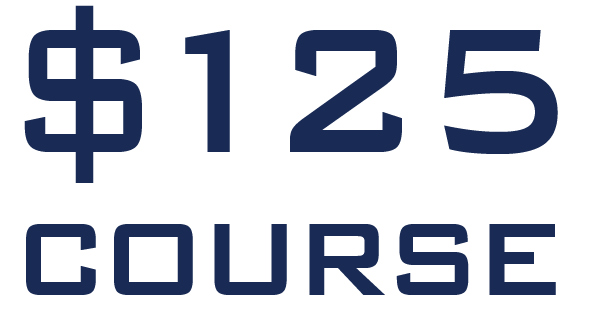
Price: $125 | Credits: One Semester | Dept: Math | Course ID# 223-2
This course is the second semester of Geometry and includes right triangles and trigonometry, quadrilaterals and other polygons, circles, solids, and probability. This course is typically taken as the second part in a sequence including Geometry (Part 1) or is taken alone to satisfy credits for the second semester of Geometry. Geometry is approved by the University of California A-G as mathematics (category C).
Upon completion of this course, the student is awarded 5 credits. Each credit corresponds to 15 hours of study. Of course, some students work more quickly than others, and some can devote more hours to study, so some students are able to complete the course at an accelerated rate.
LEARNING OBJECTIVES
In this module, students gain a comprehension of the following:
- How to solve right triangles using the Pythagorean Theorem, its converse, special right triangles, and trigonometric relationships.
- How to apply trigonometric functions (sine, cosine, and tangent) and use the Laws of Sines and Cosines to solve triangles.
- How to solve real-world problems involving angles of elevation and depression.
- How to classify polygons and apply properties of interior and exterior angles.
- How to analyze and solve problems involving special quadrilaterals, including parallelograms, rectangles, rhombi, squares, trapezoids, and kites.
- How to use coordinate geometry (slope, distance, midpoint) to verify and classify quadrilaterals.
- How to identify and apply properties of circles, including chords, secants, tangents, radii, and diameters.
- How to calculate arc measures, central and inscribed angles, arc length, and sector area.
- How to write and graph equations of circles on the coordinate plane and understand basic conic sections.
- How to calculate perimeter and area of polygons, including regular and composite figures.
- How to calculate surface area and volume of three-dimensional figures, including prisms, pyramids, cylinders, cones, and spheres.
- How to analyze composite solids and understand how scale factor affects surface area and volume.
- How to represent and analyze sample spaces, set notation, and Venn diagrams.
- How to calculate theoretical and experimental probability, including simple and compound events.
- How to apply the addition and multiplication rules, conditional probability, and probability models involving
TOPICS COVERED
- Pythagorean Theorem and Its Converse
- Special Right Triangles
- Basic Trigonometric Functions
- Angles of Elevation and Depression
- Area of a Triangle
- Law of Sines and Law of Cosines
- Classifying Polygons
- Polygon Theorems
- Parallelograms
- Rectangles, Rhombuses, and Squares
- Trapezoids and Kites
- Quadrilaterals on a Coordinate Plane
- Constructing Regular Polygons
- Central Angles, Chords, and Arcs
- Inscribed Angles and Inscribed Polygons
- Tangent Lines and Circumscribed Polygons
- Chords, Secants, and Tangents
- Area and Circumference of a Circle
- Arc Length and Area of Circle Sectors and Segments
- Equations of Circles
- Introduction to Conic Sections
- Area and Perimeter of Polygons
- Solids, Nets, and Cross Sections
- Surface Area of Prisms and Cylinders
- Surface Area of Pyramids and Cones
- Volume of Prisms and Cylinders
- Volume of Pyramids and Cones
- Surface Area and Volume of Spheres
- Composite Solids
- Similar Solids and Effects of Changing Dimensions
- Sample Spaces
- Probability and Counting
- Geometric Probability
- Two-Way Frequency Tables
- Probability and the Addition Rule
- Probability and the Multiplication Rule
- Conditional Probability
- Probability with Permutations and Combinations